Search "bonsai starter kit" and you'll find sets with twelve, sometimes eighteen pieces — root hooks, jin pliers, knob cutters, multiple wire gauges, a turntable, a moisture meter. Almost none of that gets touched in your first year. Buying it all up front is the single most common way beginners overspend before they've kept a single tree alive.
Here's what actually earns a spot in your first toolkit, and why.
1. A pair of bypass pruning shears
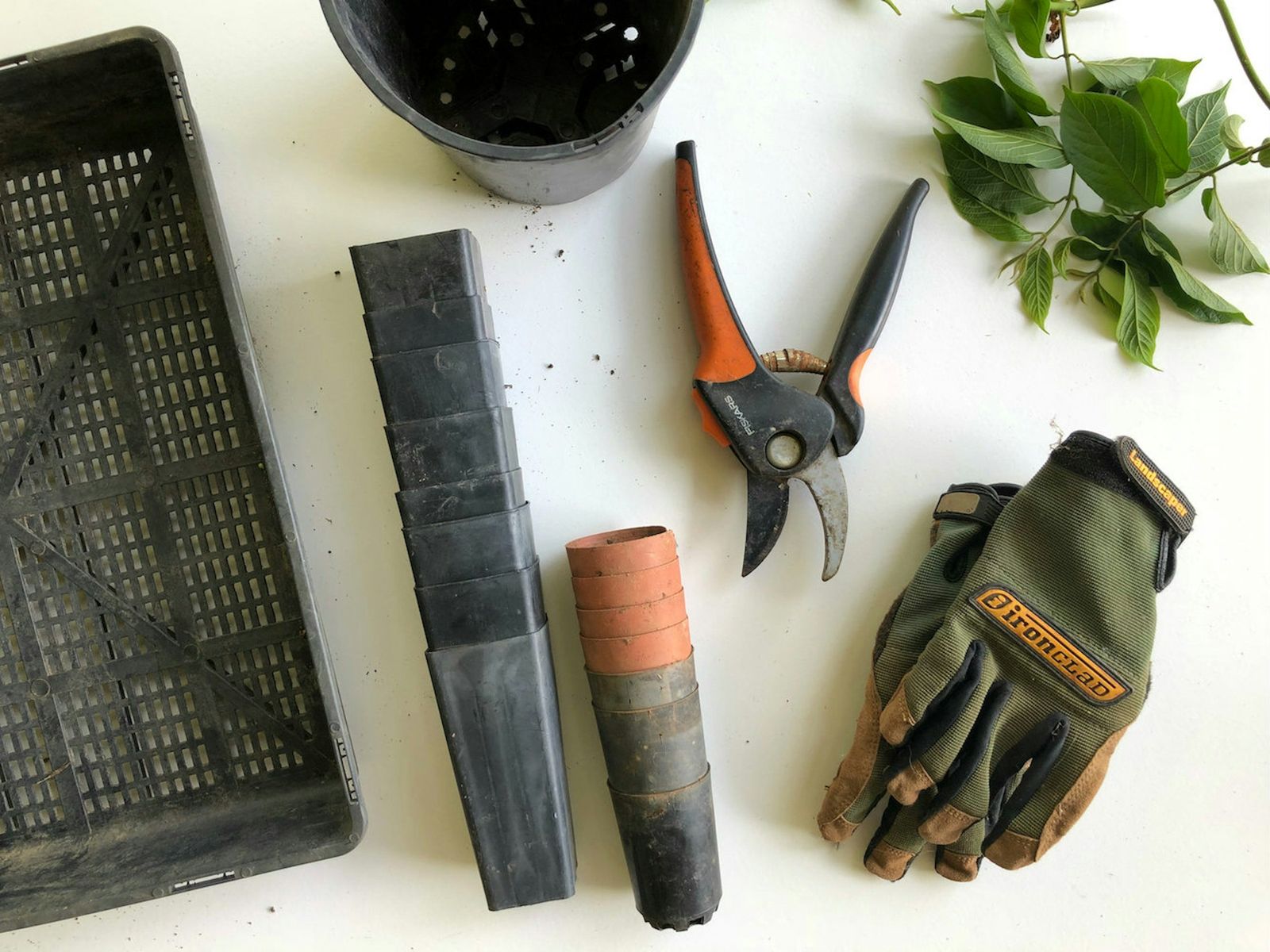
Not the anvil kind sold at hardware stores — bypass shears (two curved blades that slide past each other) make a clean cut instead of crushing the stem. Crushed cuts heal slower and invite disease. This is the one tool you'll use almost every session, even if that session is just trimming two stray shoots.
2. Concave cutters
These leave a small dish-shaped wound instead of a stub when you remove a branch. On a young tree this matters less, but the habit of using them from day one means you're not relearning technique later when the cuts actually matter cosmetically.
3. One roll of aluminum wire, medium gauge
You don't need the full gauge set (1mm through 6mm) on day one. A single medium roll — roughly 2mm — covers most young branches on a beginner-sized tree. Copper wire holds shape better but is harder to work with and unforgiving of mistakes; save it for later.
4. A small root rake or hook
Used at repotting time to gently comb out the root ball without tearing roots. You'll only need this once or twice a year, but there's no substitute for it — fingers alone tend to snap roots that a rake would have separated cleanly.
5. A watering can with a narrow, long spout
Not strictly a "bonsai" tool, but it's the one piece of equipment people underestimate. A wide-mouth can splashes soil out of a shallow bonsai pot and disturbs surface roots. A long, narrow spout lets you water slowly and evenly without eroding the mix — directly relevant if you've read the watering guide on this site.
What can wait
Jin pliers and deadwood tools (for advanced styling techniques you won't use on a young tree), a turntable (a lazy Susan from a kitchen store does the same job for free), a soil sieve (only relevant once you're mixing your own soil in bulk), and a concave knob cutter beyond the basic concave cutter above. None of these are wasted money eventually — they're just not a first-year purchase.
A note on quality
Buy mid-range, not the cheapest option, for the shears and cutters specifically — these two tools contact live tissue directly, and a dull or poorly aligned blade tears rather than cuts, which slows healing and increases infection risk. The wire, watering can, and root rake are far less sensitive to price; budget versions work fine there.
Taking care of the tools themselves
Bypass shears and concave cutters are contact tools — they touch sap, resin, and sometimes soil on every use, and a surprising number of "the blade feels dull already" complaints are actually just residue buildup rather than genuine dullness. Wipe blades down with a cloth after each session, and every few weeks give them a more thorough clean with isopropyl alcohol, which also disinfects the edge between cuts on different trees if you own more than one. This matters more than it sounds: a dirty blade drags through a cut rather than slicing cleanly, which produces exactly the kind of crushed, slow-healing wound clean tools are supposed to avoid in the first place.
Store tools dry. Bonsai tools are typically carbon steel rather than stainless, chosen because it holds a sharper edge, but carbon steel rusts noticeably faster than stainless if put away wet or humid. A light coating of camellia oil or plain mineral oil after cleaning, standard practice among more experienced growers, prevents most rust issues and takes under a minute per session.
Where to actually buy
Specialty bonsai suppliers (online, or local bonsai club vendors if one exists near you) sell purpose-built shears and cutters at a range of price points, and mid-range options from these sources are usually a better first purchase than the cheapest generic "bonsai tool set" listing on a general marketplace, which often uses softer steel that dulls quickly and doesn't hold an edge through repeated sharpening. The wire, watering can, and root rake are far less sensitive to source — a general garden supplier or hardware store version works identically to a bonsai-branded one for those three.
According to Virginia Tech Cooperative Extension's guide to bonsai fundamentals, the craft itself relies on relatively few core techniques executed consistently — pruning, wiring, and root work — rather than a large tool inventory (Virginia Tech Extension, "The Art of Bonsai"). The tools above cover all three.