"Pruning" gets talked about as one activity, but it's really two, with different goals, different timing, and very different levels of risk if done wrong. Conflating them is a common way a beginner accidentally sets a tree back an entire growing season.
Maintenance pruning
This is the low-stakes, frequent kind: trimming new shoots back to maintain the tree's existing shape, removing crossing or crowded growth, and generally keeping the silhouette you already have. It can be done regularly throughout the growing season without much risk, because you're removing recent growth, not established structure. This is the pruning a beginner should be doing most of the time.
Structural pruning
This is the higher-stakes kind: removing an entire branch, a significant portion of the canopy, or making a cut into older, thicker wood to change the tree's fundamental shape or direction. This is where mistakes actually cost you — an ill-timed or overly aggressive structural cut can weaken a tree significantly, and some species don't recover well from heavy structural pruning during the wrong season at all.
Timing matters more for structural pruning
For most temperate deciduous species, major structural work is best done during late dormancy, just before spring growth resumes — the tree has full energy reserves stored and isn't actively supporting leaves, which reduces stress from the cut. For evergreens like juniper, structural work is often better timed to avoid the most extreme heat or cold, with more flexibility than deciduous species but still a real seasonal consideration. Maintenance pruning, by contrast, is generally safe throughout the active growing season for almost all species.
The cut itself matters
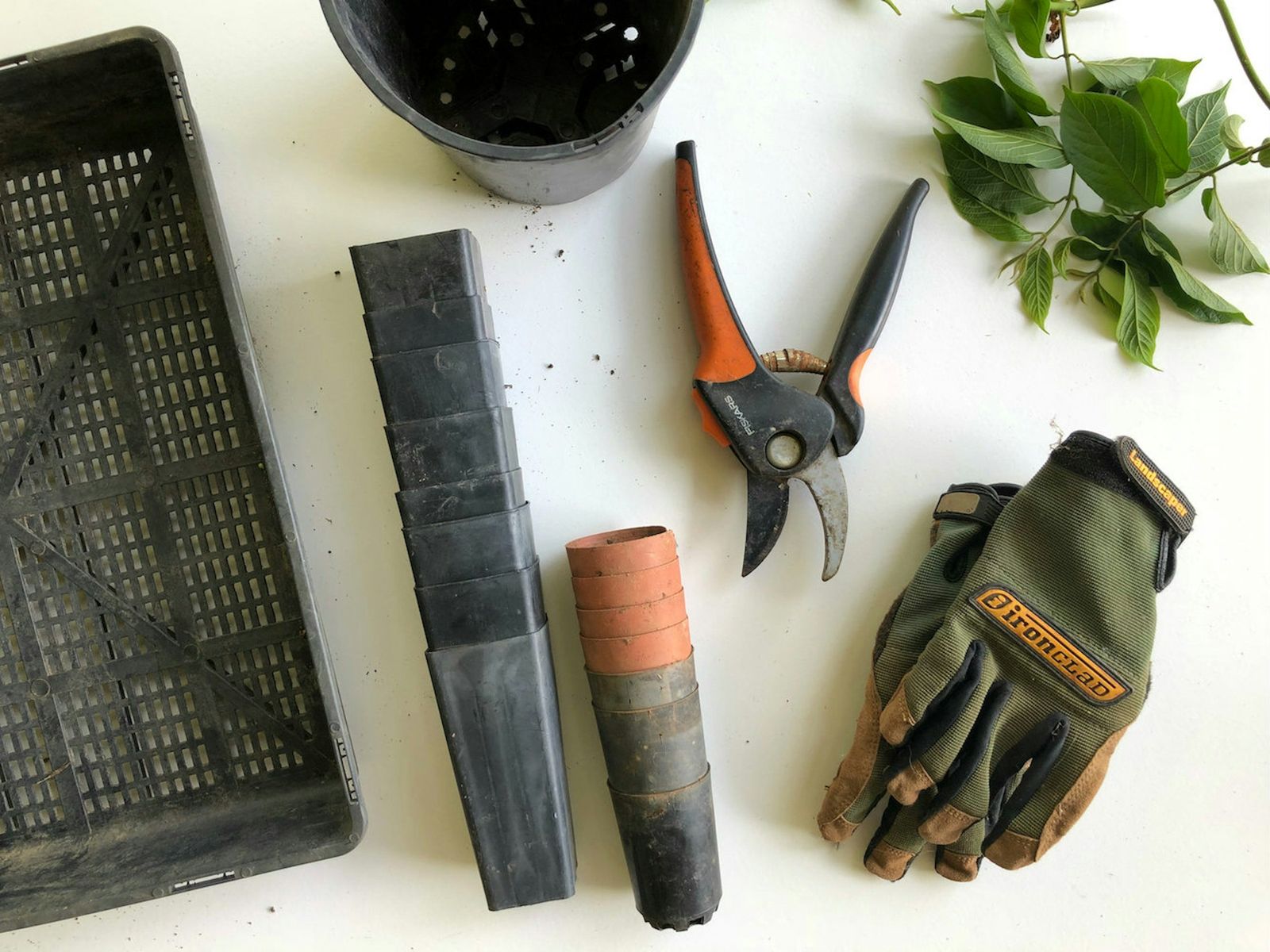
Use bypass shears or concave cutters (see the tools guide), not anvil-style tools that crush rather than cut cleanly. A clean cut heals faster and is less likely to invite disease. For structural cuts on larger branches, concave cutters leave a dished wound that calluses over more cleanly than a flat stub would.
How to tell which one you're actually doing
A simple test: if the cut removes growth from this season or the last, and the tree's overall silhouette stays essentially the same afterward, that's maintenance. If the cut changes the tree's silhouette, removes an entire branch, or goes into wood more than a season or two old, that's structural — treat it with the seasonal timing and caution above.
After a structural cut
Reduce fertilizing until you see clear signs of recovery (new growth resuming near the cut), similar to post-repotting care — a tree recovering from a significant structural cut is in a comparable stress state to one recovering from root work. Protect from harsh direct sun or extreme temperature for a couple of weeks if the cut removed a meaningful portion of the canopy that was previously providing some natural shading to the trunk.
Sterilize between structural cuts
For maintenance pruning on the same tree, tool sterilization between cuts isn't usually necessary. For structural cuts, especially on a tree that's been sick or is recovering from another issue, wiping the blade with isopropyl alcohol between cuts (and definitely between different trees) reduces the risk of spreading disease through an open wound — a low-effort habit that costs seconds and meaningfully lowers a real risk.
A simple way to decide what to cut
For maintenance pruning, a reasonable working rule is to trim new growth back to one or two leaf pairs or nodes once it's extended noticeably beyond the tree's existing silhouette — this encourages branching closer to the trunk rather than long, sparse extensions. For structural decisions, step back and look at the tree from a few feet away before cutting, not just up close — branch relationships and overall balance are much harder to judge at close range, and this is exactly where an impulsive close-up cut tends to go wrong.
Recovering from an over-aggressive cut
If you do remove more than you meant to, the honest next step is simply patience and stable care (light, water, no fertilizer push) rather than a corrective action — most beginner-appropriate species, particularly the more forgiving ones covered in the species guide, recover from an overly hard prune with time, even if it sets the tree's shape back a season.
Virginia Tech Cooperative Extension's guide to bonsai fundamentals distinguishes between routine maintenance trimming and structural shaping as separate skills with separate timing considerations — the same distinction driving this guide (Virginia Tech Extension, "The Art of Bonsai").