Search "how often to water bonsai" and you'll get answers like "every 2-3 days" or "when the top layer feels dry." Both are incomplete enough to kill a tree. Here's the actual method, plus the variables most guides skip entirely.
Why a fixed schedule fails
A bonsai's soil dries at a rate set by four things working together: species (a juniper drinks differently than a ficus), pot size (a 4-inch pot can dry out in a single hot afternoon), your home's humidity and airflow (a spot near an AC vent or heating register dries soil dramatically faster than the rest of the room), and season (the same tree can need watering daily in July and once a week in January). A schedule that's right in one of these conditions will be wrong in the others.
The finger test — the actual method
- Push a finger about an inch into the soil, near the trunk, not right at the edge of the pot.
- Dry at that depth → water now, thoroughly.
- Still cool or slightly damp → wait, check again the next day.
Do this daily until you get a feel for your specific tree's rhythm — most people learn it within 2-3 weeks and stop needing to think about it consciously.
If you want a second signal: weight, not just touch
Lift the pot right after watering, and lift it again the next day. A fully-watered pot is noticeably heavier than a dry one — this "weight test" is what many experienced growers actually rely on day to day, because it doesn't disturb the soil surface the way repeated finger-testing can. Worth learning alongside the finger test, not instead of it.
How to actually water (technique matters as much as timing)
- Water slowly until it runs out of the drainage holes — this ensures the whole root ball gets wet, not just the top inch
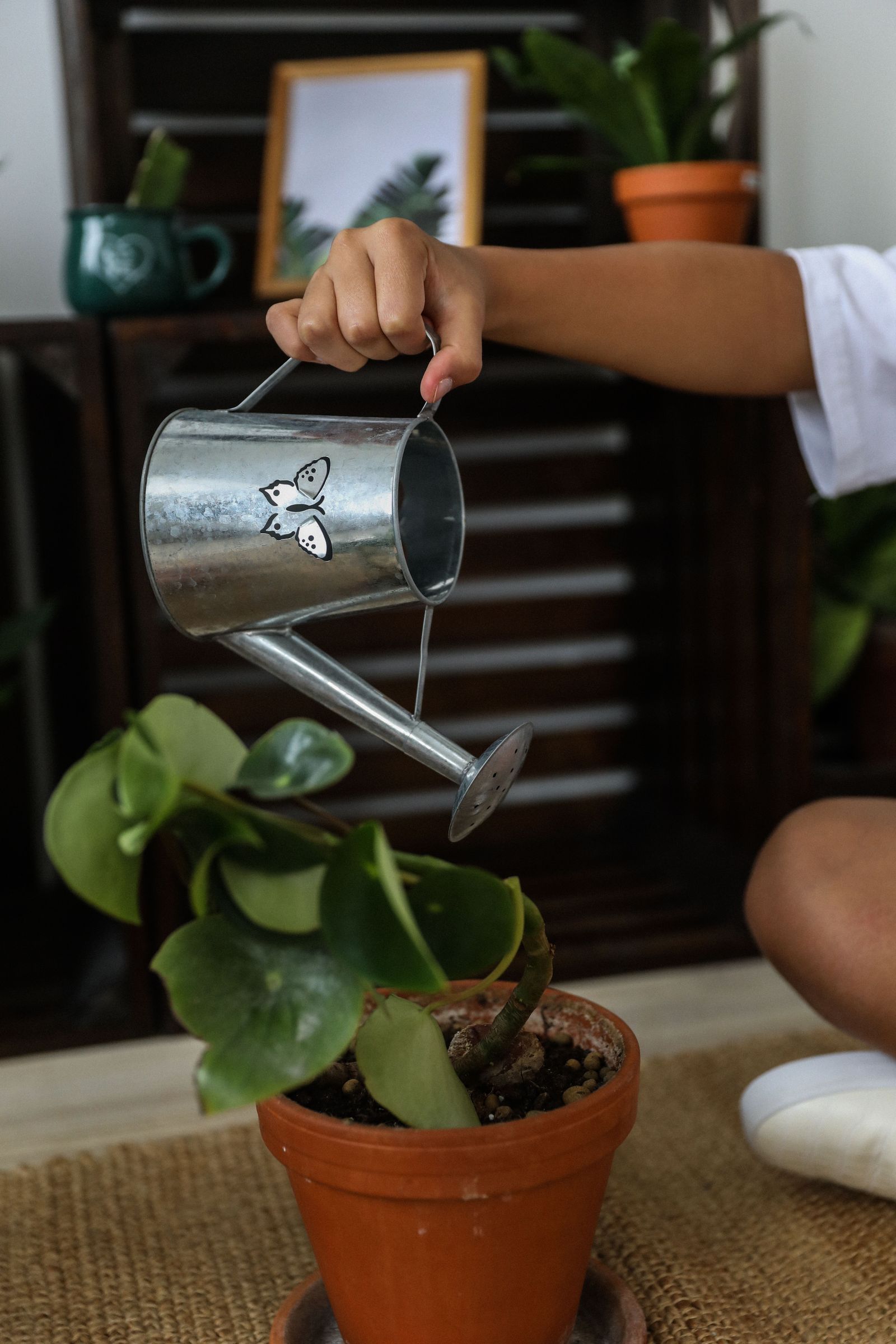
- Use a narrow-spout can so you're not blasting soil out of the pot or exposing roots
- Empty any water that collects in a saucer underneath — roots sitting in standing water is a direct path to root rot
Overwatering: the specific signs
- Lower/older leaves yellowing and dropping while the soil still feels damp
- Soil that never fully dries between waterings, even after several days
- A sour or musty smell at the soil surface, or soft, mushy bark near the base
Underwatering: the specific signs
Leaves that curl, crisp at the edges, or drop while feeling dry and brittle (not soft) — combined with soil that's bone-dry more than an inch down. If this is a repeated pattern rather than a one-off miss, increase your checking frequency rather than jumping straight to daily watering; use the finger test to find the actual rhythm.
Seasonal and location adjustments worth knowing
Trees near a window that gets strong afternoon sun, or anywhere within a few feet of a heating/AC vent, will dry noticeably faster than the same tree in a stable-humidity spot — check those trees on their own schedule, not the same one as trees elsewhere in your home. In winter, most indoor bonsai slow down and need watering less often; resist the urge to keep summer frequency going into colder months.