"Bright indirect light" is the most repeated, least useful phrase in houseplant care advice, and bonsai guides borrow it constantly. It doesn't tell you what to actually do. Here's the more concrete version.
Outdoor temperate species (juniper, pine, maple, elm)
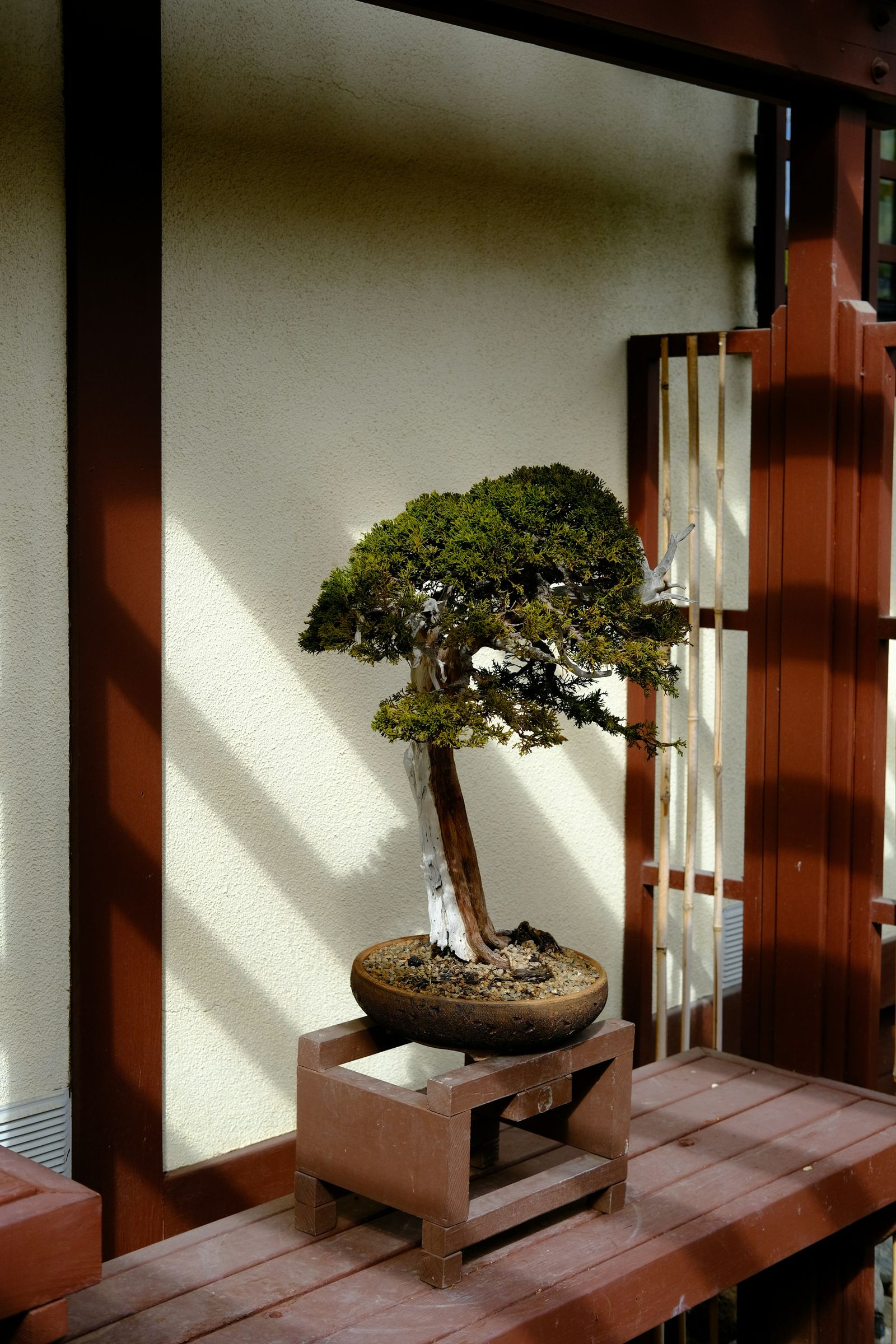
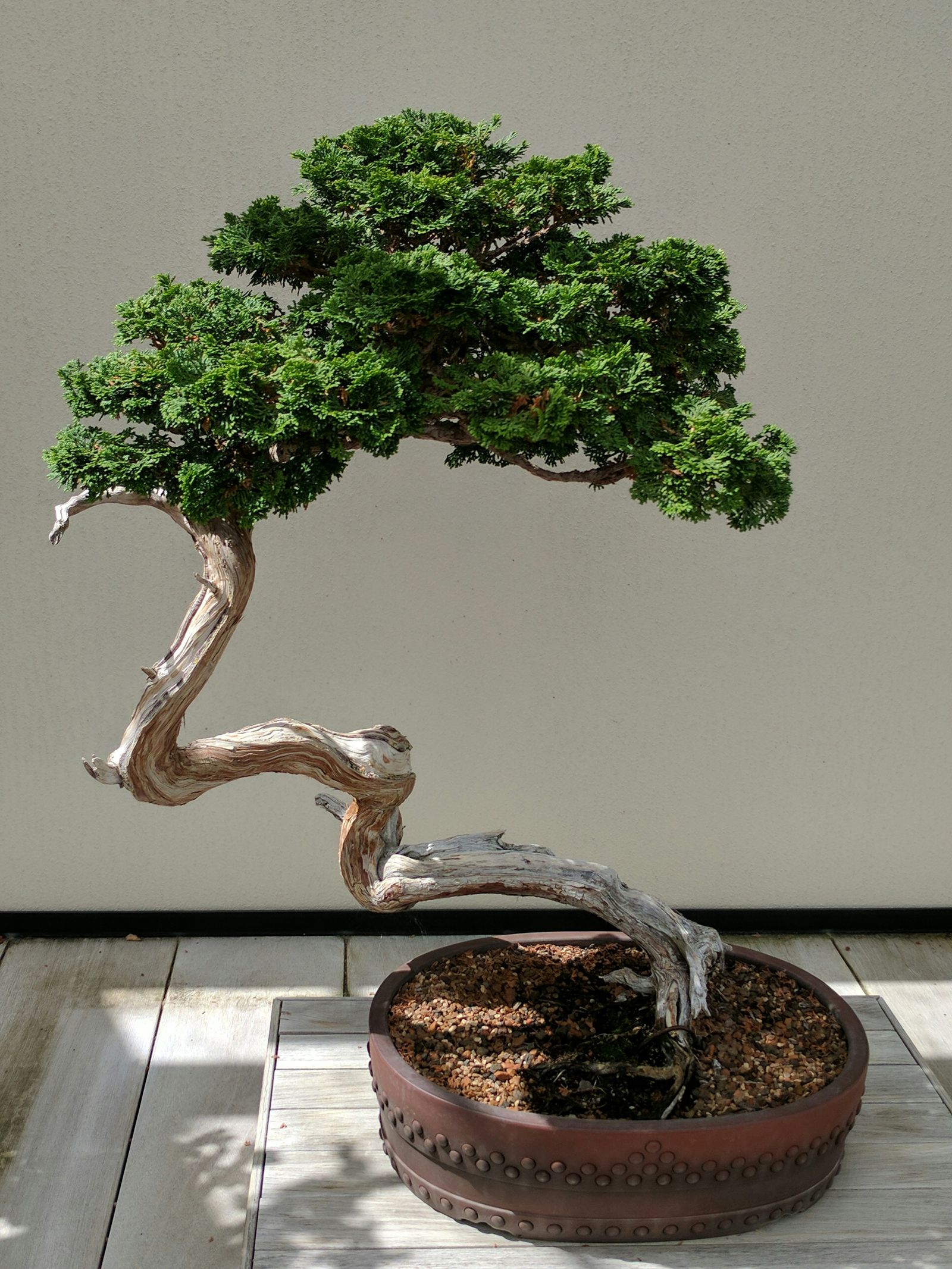
These want as close to full sun as your specific climate allows — several hours of direct sun daily during the growing season, more than almost any houseplant would tolerate. They evolved outdoors in open conditions, not filtered through a canopy. The main real constraint isn't "too much light," it's protecting a newly repotted or stressed tree from harsh afternoon sun for a few weeks while roots recover — that's a temporary exception, not the general rule.
Indoor tropical species (ficus, jade, schefflera, money tree)
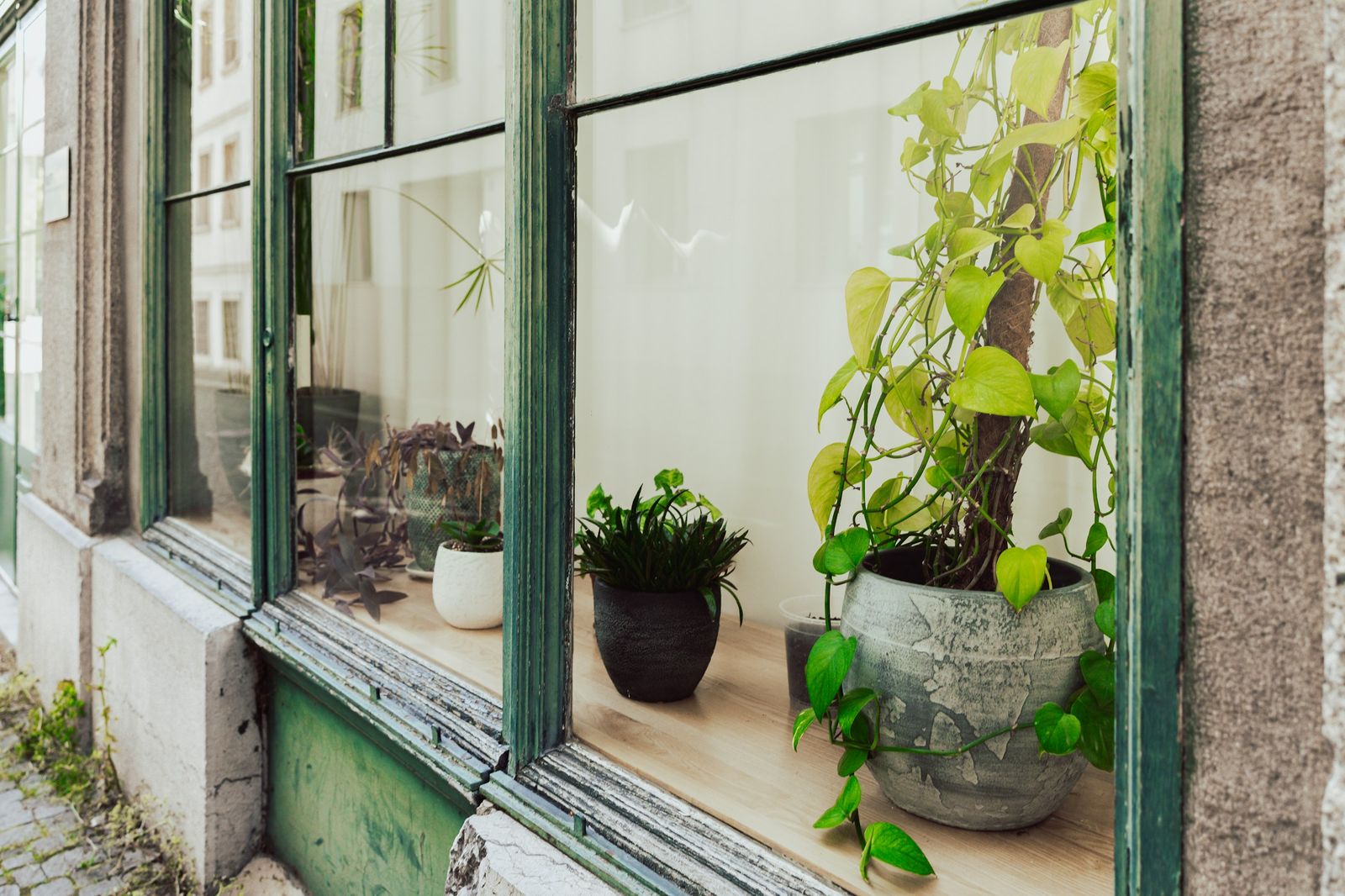
These need the brightest spot your home actually has, which in most US homes means a south-facing or unobstructed east-facing window, not just "near a window." A few feet back from that same window, or a north-facing window, is usually not enough — the light intensity drops off far faster with distance than most people expect. If your only bright option is a west-facing window, that generally works too, though afternoon heat buildup against glass is worth watching in summer.
What insufficient light actually looks like
It rarely looks like "the leaves are pale." More often it shows up as:
- New growth noticeably smaller and more widely spaced than older growth (leggy, stretched appearance)
- Slow or stalled growth even during the active growing season
- Leaf drop concentrated on the side of the tree furthest from the light source
- A tree that seems to just "sit there" for months without visible change
This overlaps with several other diagnoses, which is why the yellowing leaves guide and the general troubleshooting approach both treat light as one of the first things to rule out, not the last.
If natural light genuinely isn't enough
A dedicated grow light is a legitimate, common solution for apartments and offices without strong natural light — not a workaround people should feel is a failure. Full-spectrum LED grow lights sold for houseplants work fine for indoor bonsai species; positioning and duration (typically 10-12 hours) matter more than brand.
Seasonal light changes matter too
A window that's bright enough in summer may not be in winter, when the sun's angle is lower and days are shorter — this is a common reason a tree that seemed fine for months suddenly starts declining in late fall. Rotating a tree closer to the window, or supplementing with a grow light for the darker months, is a normal seasonal adjustment rather than a sign something went wrong with the tree itself.
Checking your light without guessing
Human eyes are poor judges of light intensity because they adjust automatically — a room that feels "bright" to you can still be far dimmer than a plant needs, since your perception compensates in a way a leaf's photosynthesis doesn't. A simple, free way to get an objective read is a light meter app on a smartphone, which measures actual lux at the plant's location rather than relying on subjective impression. As a rough benchmark, full outdoor summer sun measures somewhere in the tens of thousands of lux, while a dim interior room might sit under a thousand — a gap most people underestimate until they actually measure it.
Window direction, by general US geography
South-facing windows get the most consistent light throughout the day across most of the continental US and are the default best option for tropical bonsai species. East-facing windows get strong morning light and are a solid second choice, particularly in hotter southern climates where harsh afternoon sun through a west-facing window can actually stress a tree with heat rather than help it. West-facing windows work but concentrate light and heat into the afternoon, which is worth watching in summer in warmer regions. North-facing windows, in most of the US, don't provide enough direct light for the majority of bonsai species without supplemental grow lighting.
The University of Maryland Extension notes that light deficiency is one of the most under-diagnosed causes of indoor plant decline, in part because its symptoms overlap heavily with watering and nutrient problems (University of Maryland Extension, "Lighting for Indoor Plants") — worth ruling out early rather than last.